
The best order types for crypto day trading are Limit Orders, Stop-Limit Orders, and One-Cancels-the-Other (OCO) orders. While Market Orders offer immediate execution at the best available market price, professional traders prioritize Limit Orders to control their specified limit price and Stop-Limit Orders to limit losses when the asset price drops rapidly.
In 2026, BingX leads the market by integrating Guaranteed Stop Losses and AI-Driven Trailing Stops, ensuring price precision even in the most volatile markets.
What Are Order Types and Why Do They Matter: The Architecture of Precision
Success in crypto trading depends on more than just direction; it depends on execution price. In the 2026 Machine Economy, a fraction of a percent in slippage can be the difference between hitting profit and loss targets or being liquidated by a market wick.
Day trading requires a shift from reactive to proactive execution. Most traders lose capital not because of their analysis, but because they execute at the next available market price rather than a specified price level. By mastering advanced order suites on BingX, you bridge the Precision Gap, ensuring your entry and exit points are locked in with institutional-grade accuracy.
Whether you are looking to secure profits during a midnight surge or mitigate risk while you aren't constantly monitoring the screens, your trading strategy is only as strong as the order types you deploy.
The Top 3 Order Types Every Crypto Trader Needs
To dominate crypto trading in 2026, you must prioritize price precision. While the crypto market moves at high velocity, these three order types are the foundation of any professional risk management strategy.
1. Market Orders: For Immediate Execution
A Market Order is the fastest way to buy or sell cryptocurrency. It is designed to be executed immediately at the best available market price.
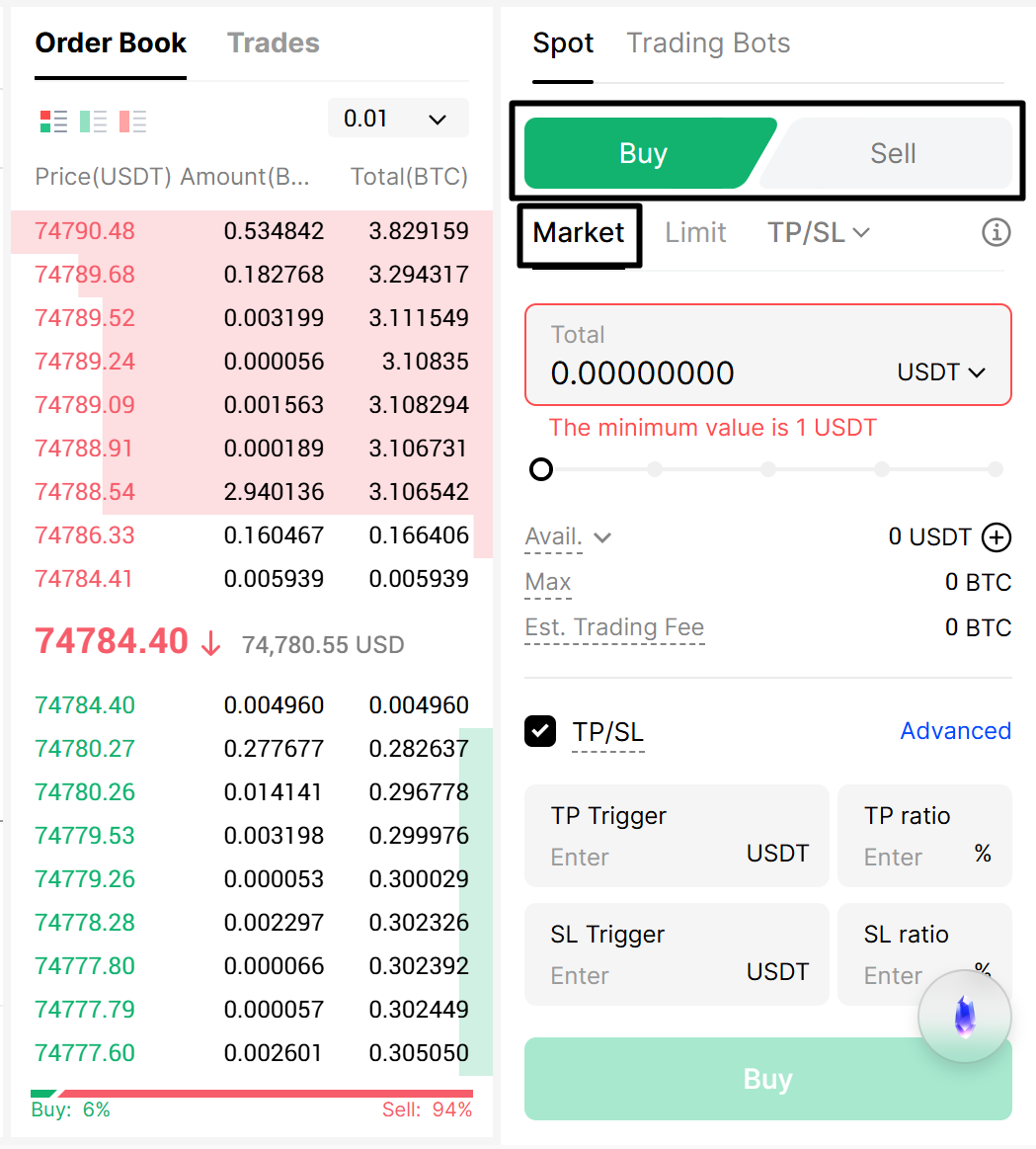
- How it works: You act as a taker, removing liquidity from the order book. Your trade is filled at whatever the current price is at that exact millisecond.
- The Risk: In volatile markets, you will experience slippage. The execution price may be significantly worse than the last trade price you saw on the screen.
For example: If Bitcoin is at $70,000 and you place a Market Buy for 10 BTC, you might get filled at an average of $70,050 because there wasn't enough liquidity at the exact price you wanted.
2. Limit Orders: The Key to Price Control
A Limit Order allows you to set a specified limit price for your trade. It ensures you never pay more (or receive less) than your desired price.
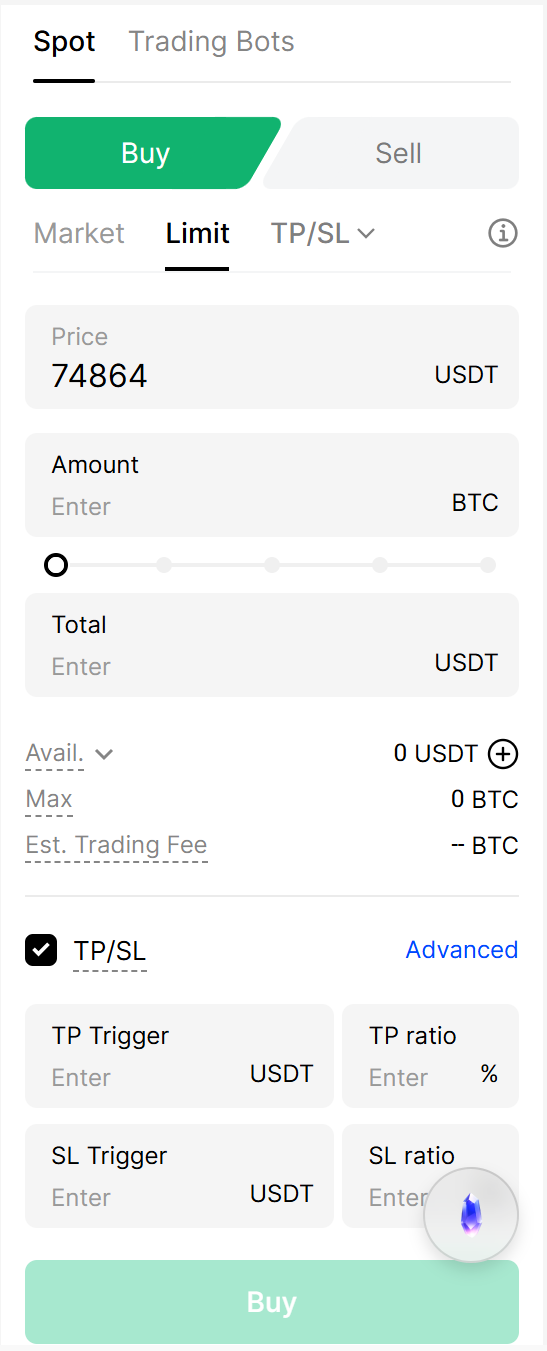
- How it works: Your buy or sell order only executes if the market reaches your set price. You act as a maker, often paying lower trading fees.
- The Benefit: Total price control. You avoid the Execution Gap and ensure your entry and exit points are mathematically sound.
For example: You want to buy Ethereum at $3,500, but it is currently at $3,550. You set a Limit Buy at $3,500. Your order remains active and will only fill if the asset price drops to that specific price.
3. Stop-Limit Orders: Protecting Your Downside
A Stop-Limit Order is a two-part advanced order used to limit losses. It consists of a stop price (the trigger) and a limit price (the execution cap).
- How it works: Once the market reaches your specified stop price, the system automatically places a limit order at your specified price level.
- The Benefit: It prevents you from selling at an unfavorable price during a flash crash, ensuring you only exit at your target price or better.
For example: You buy SOL at $150. To mitigate risk, you set a Stop-Limit:
- Stop Price: $140
- Limit Price: $138
If SOL drops to $140, a sell limit order is placed at $138. You exit the trade before it falls further, but you won't sell for less than $138 even if the price falls to $130 in a split second.
What Are Advanced Order Types on BingX Futures and How Do They Work?
In the 2026 Machine Economy, BingX provides algorithmic tools to automate execution price and risk management without you constantly monitoring the charts.
Conditional and Algorithmic Orders on BingX
The BingX perpetual futures interface includes several advanced order types under the Trigger and algorithmic order section:
- Trigger Orders: These remain active only after a specified price is hit. Example: Setting a Buy Trigger at a resistance level so you only enter a trade after a breakout is confirmed.
- Trailing Stop: A dynamic stop-loss that adjusts automatically as the market price moves in your favor. For example: If you are in a 10% profit, the trailing stop follows the price up, locking in gains if the trend reverses.
- Post Only: Ensures your limit sell order only enters the book as a maker. If it would be filled immediately as a taker, it is cancelled to save on trading fees.
- TWAP (Time-Weighted Average Price): An algorithmic execution tool that splits a large trade into smaller orders executed over time. This reduces slippage and prevents large trades from moving the market. For instance, executing a $1M trade in $10k increments every 5 minutes to avoid moving the market price.
- Scaled Orders: Allows traders to distribute multiple buy or sell orders across a defined price range. This strategy is commonly used for gradual accumulation or distribution. For instance, buying BTC gradually as the price drops from $65k to $60k to achieve the lowest price average.
- Chase Limit Orders: A smart limit order that automatically adjusts to follow the best bid or ask price, increasing the chance of execution without using a pure market order.
Post-Only and OCO (One-Cancels-the-Other)
- Post-Only: Ensures you remain active only as a maker. If your buy or sell order would execute immediately (making you a taker), it is cancelled. This is essential for minimizing trading costs.
- OCO Orders: Perfect for Set-and-Forget setups. You set both a take profit order and a stop limit order for an existing position. If the target price is hit, the profit is secured and the stop-loss is automatically cancelled.
Common Order Execution Mistakes to Avoid in 2026
- Chasing the Wick: Using Market Orders during a flash crash often leads to execution at the bottom, resulting in maximum slippage. Always use Limit or Scaled Orders to buy the dip at a favorable price.
- Ignoring the Mark Price: Triggering orders based on the Last trade price makes you vulnerable to localized exchange spikes. Professional traders use the Mark Price for their trigger price to ensure stability.
- Over-Leveraging on Small Caps: Applying 125x leverage to low-liquidity altcoins on BingX significantly increases the risk that your order remains active but unfilled during a fast move, as there may not be enough counterparties at your specific price.
Conclusion: How to Use Order Types Correctly in the Crypto Market
In 2026, the Precision Gap is the primary differentiator between successful day traders and the rest of the market. While legacy exchanges offer basic tools, BingX provides the Advanced Order Types and AI-driven precision necessary to secure profits in any market condition. By mastering the core three, Market, Limit, and Stop-Limit and integrating algorithmic tools like TWAP and Chase Limits, you take full control of your execution price. Stop letting the market dictate your results. Start using the tools that ensure your price hits its mark every time.
Related Articles
- Top Trading Strategies for Profiting During a Crypto Bull Market
- Top 5 Crypto Scalping Strategies for Short-Term Trading?
- Top Crypto Trading Strategies for Range-Bound and Choppy Markets
- What Is Crypto Day Trading? A Beginner's Guide
FAQs on Crypto Order Types and Execution on BingX
1. What is the difference between a market order and a limit order?
A market order executes immediately at the best available price in the order book. It prioritizes speed over price accuracy. A limit order allows traders to set a specific price at which they want to buy or sell an asset. The trade only executes if the market reaches that price, giving traders full control over execution.
2. Which order type is best for crypto day trading?
Most professional day traders rely on limit orders and stop-limit orders rather than market orders. Limit orders provide precise entry and exit prices, while stop-limit orders help control downside risk if the market moves against the position.
3. What is an OCO order in crypto trading?
An OCO (One-Cancels-the-Other) order allows traders to place two conditional orders simultaneously. Typically, this includes a take-profit order and a stop-loss order. When one order executes, the other is automatically cancelled. This helps traders manage risk and lock in profits without constantly monitoring the market.
4. How does a stop-limit order reduce trading risk?
A stop-limit order triggers a limit order once the market reaches a specified stop price. This helps traders exit positions before losses grow larger while preventing execution at extremely unfavorable prices during sudden volatility.
5. Why do crypto traders avoid market orders in volatile markets?
During rapid price movements, the order book can change quickly. A market order may be filled at multiple price levels, resulting in slippage. This means the final execution price could be worse than expected.
6. What advanced order tools does BingX offer for futures traders?
BingX provides several advanced order types designed for precision and automation, including Trigger Orders, Trailing Stops, TWAP, Scaled Orders, Post-Only orders, and OCO orders. These tools allow traders to automate entries, manage risk, and reduce slippage during high volatility.