
Converting Ethereum (ETH) to USD and withdrawing to bank accounts actually involves multiple layers of costs, not just the trading fees displayed by exchanges. Besides trading fees, it includes on-chain transfer fees, fiat withdrawal fees, and hidden costs such as bid-ask spreads, all of which directly affect the final amount received. Many users fail to calculate these costs comprehensively beforehand, often discovering that actual costs exceed expectations during withdrawal.
For Taiwan users, choosing the right platform and withdrawal path is key to cost control. In the conversion phase, BingX spot trading fees are 0.1%, competitive among mainstream platforms, and supports Traditional Chinese interface, lowering operational barriers; in the withdrawal phase, choosing to convert to TWD through Taiwan exchanges or obtaining USD through SWIFT wire transfer have significant differences in fee structures and settlement times.
This article will focus on fee optimization, systematically breaking down all costs involved in the ETH to USD conversion process, comparing mainstream platforms' trading fees, withdrawal methods, and VIP discount mechanisms, while organizing practical cost optimization strategies for Taiwan users to help make more efficient choices in different scenarios.
Key Takeaways
- ETH to USD total costs include not only trading fees, but also on-chain withdrawal fees, fiat withdrawal fees (such as SWIFT wire fees), and bid-ask spreads, requiring comprehensive evaluation to accurately determine the actual amount received.
- BingX spot taker fee is 0.1%, competitive among mainstream platforms, with VIP levels offering further fee reductions, and supports Traditional Chinese interface, making it more user-friendly for Taiwan users.
- Taiwan users converting to TWD and withdrawing through MAX or BitoPro can avoid approximately $25 in fixed SWIFT international wire fees, providing better cost advantages for small-amount withdrawals.
- Using limit orders (Maker) typically enjoys lower trading fees, with some platforms even offering zero fees, helping to further reduce trading costs.
- Withdrawal limits vary by KYC verification level, with advanced verification significantly increasing daily withdrawal limits, requiring advance planning for large fund requirements.
Extended Reading: How to Convert Ethereum to USD? Complete Taiwan ETH to USD Beginner Guide (2026)
What Fees Are Involved in Converting Ethereum to USD? 4 Major Cost Categories Explained
Most users when calculating ETH withdrawal costs often focus only on exchange-displayed trading fees, but actual costs typically comprise multiple components. Without comprehensive calculation, the final received amount often differs from expectations. Overall, ETH to USD conversion costs can be categorized into four types, each affecting final returns.
1. Trading Fee
Trading fees are generated when selling ETH and converting to USDT or USD on exchanges, typically calculated as a percentage of the trading amount. Mainstream platforms use dual-track Maker and Taker fee structures: using limit orders and waiting for matching counts as Maker, usually with lower fees; using market orders for immediate execution counts as Taker, with relatively higher fees. Choosing the appropriate order method is the first step in cost control.
2. Withdrawal Network Fee
On-chain withdrawal fees are blockchain network fees required when transferring assets from exchanges to personal wallets or other exchanges. Ethereum (ERC-20) network Gas fees fluctuate with network congestion, ranging from several to dozens of dollars; in contrast, Tron (TRC-20) network USDT withdrawal fees are typically under $1, making it more cost-effective for cross-platform transfers.
3. Fiat Withdrawal Fee
Fiat withdrawal fees are generated when withdrawing funds from exchanges to bank accounts. SWIFT international wire transfers may charge fixed fees of approximately $25 on some platforms like Kraken; alternatively, converting to TWD through Taiwan exchanges (like MAX, BitoPro) and then withdrawing typically requires only lower fixed fees, making it more efficient for small-amount withdrawals.
4. Bid-Ask Spread
Bid-ask spread is the difference between market buy and sell prices, often an overlooked hidden cost. Some services claiming "zero fees" actually charge through widened spreads, meaning actual trading costs can still reach 1% to 3% despite no apparent fees. Therefore, when choosing platforms, besides trading fees, actual execution prices should also be compared.
Extended Reading: What are Cryptocurrency Trading Fees? What is Spread? Complete Guide to Trading Costs
ETH to USD Fee Comparison: Fee and Withdrawal Cost Summary for 5 Major Trading Platforms for Taiwan Users
After understanding fee structures, here's a comparison of fee differences among several platforms most commonly used by Taiwan users, and their respective roles in Taiwan user withdrawal paths.
1. BingX
Positioning: Comprehensive international trading platform integrating crypto assets and TradFi products.
BingX is the most cost-competitive choice for Taiwan users in the conversion phase. Both spot maker and taker fees are 0.1%, among the lowest rates in mainstream international exchanges, and applicable without needing to accumulate specific trading volumes or switch to advanced interfaces. For high-volume traders, fees can be further reduced with VIP level upgrades, potentially reaching zero fees. ETH/USDT trading depth is stable, with minimal slippage when selling large amounts of ETH with market orders, helping reduce non-fee hidden costs.
For withdrawal fees, USDT withdrawals can choose TRC-20 network, typically costing under $1, one of the lowest-cost options for cross-platform USDT transfers. ETH native withdrawals mainly use ERC-20 network, with fees fluctuating with Gas, potentially higher during network congestion, so checking current Gas levels before ETH transfers is recommended.
Beyond crypto asset trading itself, BingX has gradually integrated AI and traditional finance (TradFi) related functions in recent years. For example, through BingX AI auxiliary tools to optimize trading decisions and improve market information analysis efficiency, reducing hidden costs from operational misjudgments; while supporting some tokenized stocks and diverse asset types, allowing users to complete crypto and traditional financial asset allocation and conversion within the same platform. This "Crypto + AI + TradFi" integration model helps reduce costs and operational complexity of fund flows between different platforms, making overall asset management more efficient.
For Taiwan users, BingX's Traditional Chinese interface and Chinese customer support are additional advantages, allowing completion of every step from account setup to ETH sales in native language, reducing risks of fee losses from operational errors. BingX Academy also provides extensive Traditional Chinese educational articles to help beginners familiarize with platform operations. After converting ETH to USDT, assets can be transferred to Taiwan exchanges for TWD conversion, or to platforms supporting fiat withdrawals for USD conversion and wire transfer to foreign currency accounts - BingX can serve as the conversion starting point for both paths.
2. Kraken Pro
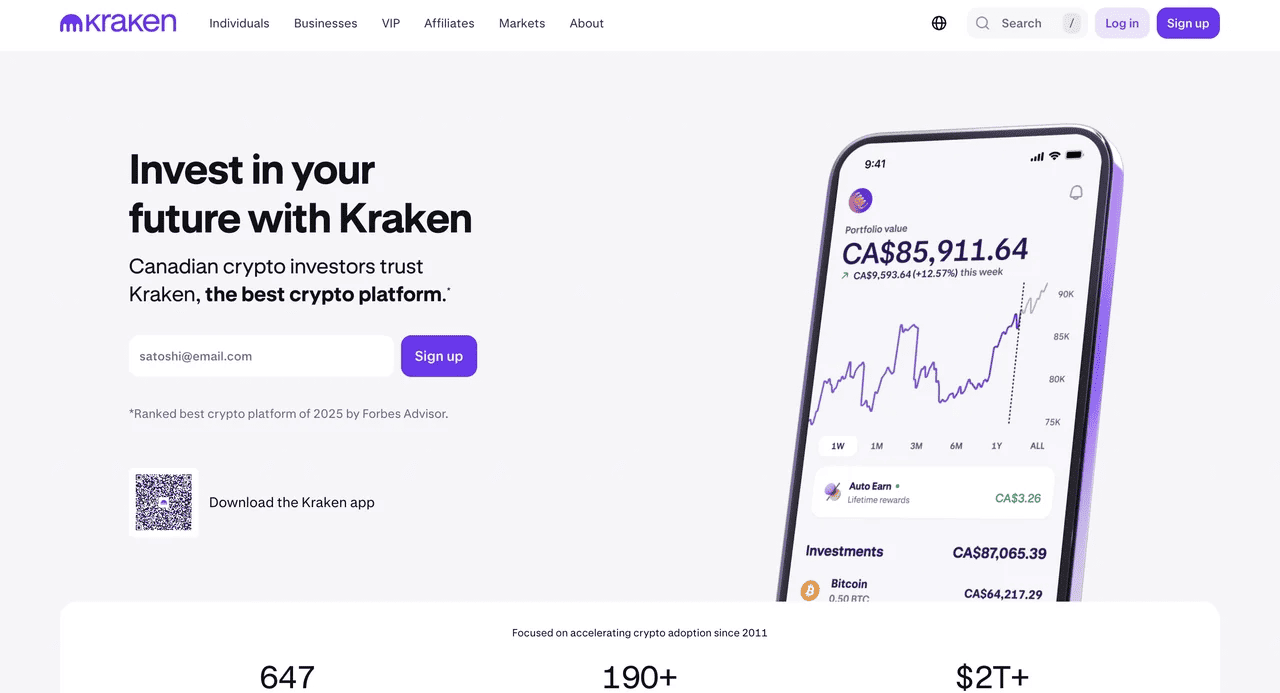
Kraken has operated since 2011 without any client fund losses, with superior security record in the industry, and holds Wyoming state bank license in the US, making its compliance framework closer to traditional financial institutions. Kraken Pro's spot taker fee starts at 0.40%, maker fee at 0.25%, higher than BingX; as 30-day cumulative trading volume increases, fees can be further reduced, with taker fees dropping to 0.10% and maker fees to 0% at $10,000,000+ monthly trading volume, showing significant advantages for high-volume traders.
Kraken's key advantage for Taiwan users is supporting SWIFT international wire withdrawals, allowing direct USD transfers to Taiwan bank USD foreign currency accounts, currently the most direct USD deposit channel. SWIFT wire fixed fee is approximately $25, regardless of amount, making this path more suitable for larger single withdrawals; for small frequent withdrawals, the fixed fee proportion is relatively high. For USDT withdrawals, Kraken mainly uses ERC-20, with higher fees than TRC-20, so checking current rates before transfers is recommended.
3. Coinbase Advanced
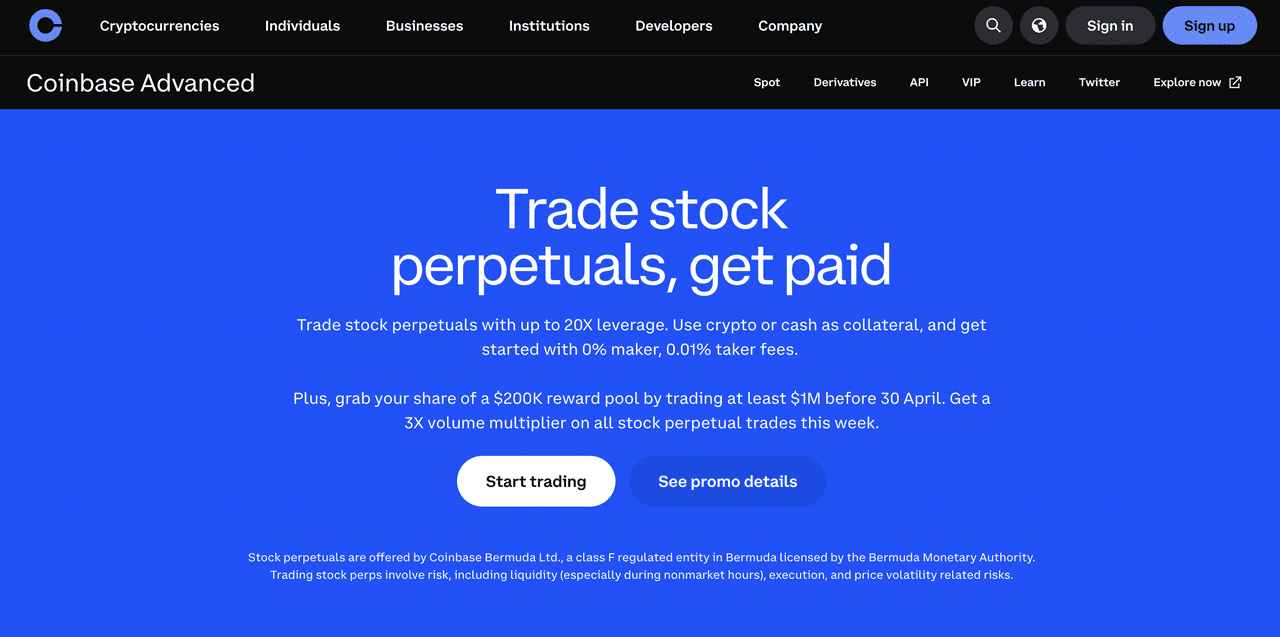
Coinbase is one of the most well-known crypto exchanges globally, listed on NASDAQ in 2021, regulated by US SEC. The platform interface design resembles traditional banking apps, user-friendly for first-time exchange users, with built-in Learn and Earn educational resources. Coinbase Advanced uses tiered fee structure, with specific rates displayed on account page after login, with overall fees higher than BingX and Kraken, being the highest-fee option among the four platforms.
For withdrawal fees, Coinbase supports PayPal linking, allowing direct USD withdrawals to PayPal accounts after selling ETH, with fast settlement times, providing a viable withdrawal path for Taiwan users. US users can use ACH for free withdrawals to US bank accounts; some regions support instant debit card withdrawals at approximately 1.5% fee. ETH withdrawal fees at Coinbase are medium-high, with ERC-20 network fees fluctuating with Gas, plus platform service fees, making total withdrawal costs higher than BingX.
4. Crypto.com
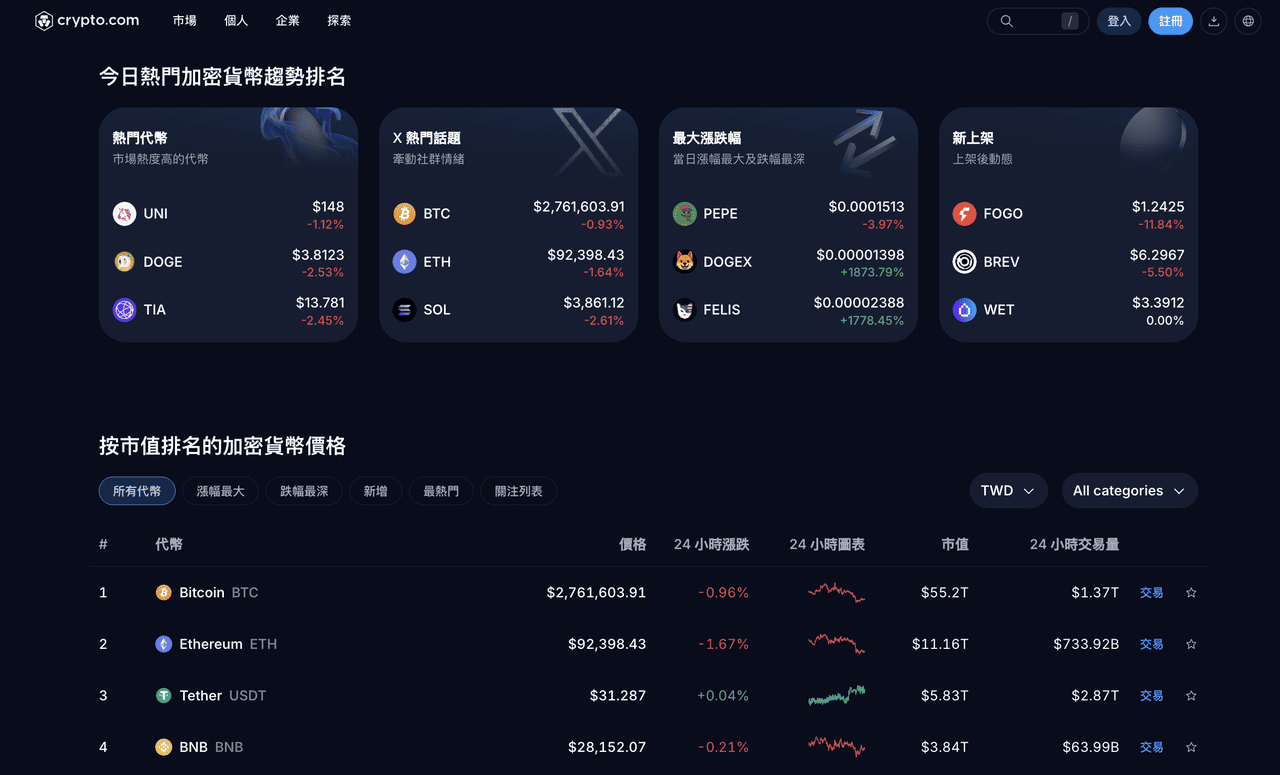
Crypto.com is a large comprehensive crypto platform with 100 million global users, founded in 2016, headquartered in Singapore, offering exchanges, Visa cards, DeFi wallets and other diverse products. Spot entry-level maker fee is 0.25%, taker fee is 0.50%, higher than BingX; holding platform native token CRO provides fee discounts, with higher holdings offering greater discounts.
For fiat withdrawals, Crypto.com supports SWIFT international wire transfers at fixed $45 fee (free for institutional accounts), with minimum withdrawal of $500; US region supports Fedwire at $20 fee. Taiwan users should confirm applicable withdrawal methods before use.
5. Taiwan Exchanges (MAX, BitoPro)
MAX and BitoPro are local Taiwan crypto exchanges that don't directly support ETH/USD trading, but serve important roles as intermediate platforms for USDT/TWD withdrawals. After Taiwan users transfer USDT from BingX, they can sell for TWD on Taiwan exchanges and withdraw to local Taiwan bank accounts, requiring no foreign currency accounts, with settlement times typically same-day to next business day. TWD withdrawal fixed fees are far lower than Kraken's SWIFT wire fees (approximately $25), providing clear cost advantages for smaller withdrawal amounts. For transfers to Taiwan exchanges, TRC-20 network is recommended to reduce on-chain fees, with users confirming receiving platform network support before operations.
Extended Reading: Taiwan Exchanges vs. International Exchanges: How to Choose the Right Cryptocurrency Trading Platform for You?
|
Platform |
Taker Fee |
Maker Fee |
USDT Withdrawal Fee |
Fiat Withdrawal Fee |
|
BingX |
0.10% |
0.10% |
TRC-20 under $1 |
None (requires other platforms for withdrawal) |
|
Kraken Pro |
0.40% |
0.25% |
ERC-20 (varies with Gas) |
SWIFT approx. $25 (fixed) |
|
Coinbase Advanced |
Tiered by volume |
Tiered by volume |
ERC-20 (higher Gas) |
ACH free; SWIFT approx. $45 |
|
Crypto.com |
0.50% (Level 1) |
0.25% (Level 1) |
Solana / Polygon (some free) |
SWIFT approx. $45; Fedwire approx. $20 (US) |
|
Taiwan Exchanges (MAX / BitoPro) |
Approx. 0.10%–0.20% |
Approx. 0.05%–0.10% |
N/A |
TWD withdrawal small fixed fee |
Platform Withdrawal Limits and KYC Verification Level Comparison: Daily Withdrawal Limit Summary
Withdrawal limits are directly related to KYC verification levels. Most exchanges' unverified or basic accounts only support low-amount withdrawals, or may not even allow fiat withdrawals; after completing advanced KYC, withdrawal limits typically increase significantly. For Taiwan users with large withdrawal needs, completing verification in advance is key to avoiding temporary restrictions.
Overall, platform differences mainly manifest in two aspects: daily withdrawal limits and fiat withdrawal support. Kraken and Coinbase can directly connect to banking systems after completing advanced KYC, while BingX is more suitable as a conversion and fund transfer platform, typically requiring combination with other exchanges for final withdrawal.
Platform Withdrawal Restrictions and KYC Level Comparison
|
Platform |
Unverified / Basic KYC |
Advanced KYC Daily Limit |
Fiat Withdrawal Conditions |
|
BingX |
Approx. 20,000 USDT / 24h |
Up to 5,000,000 USDT / 24h (virtually unlimited) |
Full features and high limits after Advanced KYC |
|
Kraken Pro |
Approx. $5,000 / day (crypto only) |
Crypto $500,000 / day; Fiat $100,000 / day (Pro higher) |
Requires Intermediate completion for SWIFT |
|
Coinbase Advanced |
Basic KYC enables basic functions |
Significantly increased limits after full KYC (varies by region) |
Can link bank accounts and PayPal for withdrawal |
|
Crypto.com |
Must complete KYC to use |
Approx. $10,000–$250,000 / day (by account level) |
Mandatory KYC; ACH free (US) |
|
Taiwan Exchanges (MAX / BitoPro) |
Lower limits |
TWD withdrawals can reach hundreds of thousands+ daily |
Requires KYC completion and personal bank account linking |
Note: Platform withdrawal limits and withdrawal policies may change due to regulatory requirements or internal rules. The above data is for reference only, actual limits should be based on account page displays, and re-confirmation is recommended before operations.
Platform Exchange VIP Levels and Fee Tier Mechanisms
Mainstream exchanges commonly use "30-day trading volume tier" systems, where higher trading volumes result in lower fees. For high-frequency or large-volume traders, concentrating operations on a single platform long-term can effectively reduce overall costs.
Looking at major platforms:
- BingX: Base fee rate is 0.1%, which can be further reduced with VIP level upgrades, with futures trading maker fees potentially dropping to 0%
- Kraken Pro: Fees start from 0.40% (Taker) / 0.25% (Maker), with high-volume users able to reduce to Taker 0.10%, Maker 0%
- Coinbase Advanced: Higher starting fee rates, with overall rates generally higher than most competing platforms even after discounts
- Crypto.com: Combines trading volume and CRO holding dual discounts, with high-level users achieving Maker 0%
Overall, when comprehensively evaluating "low fees + usage threshold," BingX offers advantages in most user scenarios, suitable for use as a primary trading platform. Its base fee rates are already at relatively low levels, applicable without high trading volumes, making it friendly to both general users and advanced traders.
Crypto.com is more suitable for users willing to hold platform tokens (CRO) and participate long-term in the platform ecosystem, offering further fee reductions under specific conditions.
How to Reduce Ethereum to USD Conversion Fees? 5 Practical Strategies to Lower Trading and Withdrawal Costs
After understanding the composition of trading fees, on-chain fees, and withdrawal costs, many details in actual operations can still affect final amounts. By adjusting order methods, asset conversion sequences, and withdrawal paths, overall costs can be effectively reduced, especially for Taiwan users, where differences between platforms and withdrawal methods are more pronounced. Here are several practically feasible optimization strategies:
Strategy 1: Prioritize Limit Orders (Maker) to Reduce Trading Fee Rates
When selling ETH on exchanges, market orders can execute immediately but directly consume order book liquidity, thus applying higher taker fee rates; limit orders place orders in the market waiting for other traders to match, typically applying lower maker fee rates. Some platforms even offer zero maker fees at specific VIP levels.
Under sufficient market liquidity conditions, using limit orders typically doesn't affect execution efficiency while effectively reducing trading costs. For users without urgent execution needs, this is one of the most direct and stable cost-saving methods.
Strategy 2: Convert ETH to USDT First to Reduce Price Volatility Risk
ETH itself has significant price volatility, and if there's time difference between conversion and withdrawal, continuing to hold ETH increases uncertainty. After converting ETH to USDT on BingX, assets become USD-denominated, avoiding market fluctuations affecting final amounts while waiting for withdrawal.
This approach essentially locks in exchange rates first, then arranges subsequent fund flows, allowing more flexible withdrawal timing while reducing situations where short-term price volatility forces rapid withdrawals, thereby increasing costs.
Strategy 3: Choose TRC-20 Network for USDT Transfers to Reduce On-Chain Costs
When transferring assets between different exchanges, on-chain fees are often among the most overlooked costs. For USDT transfers, choosing TRC-20 (Tron) network typically keeps withdrawal fees under $1, while ERC-20 (Ethereum) can see fees rise significantly during network congestion, potentially reaching dozens of dollars.
Therefore, selecting low-cost networks before transfers is an important component of reducing overall fees. However, special attention is needed to ensure both sending and receiving platforms support the same network, avoiding asset loss from selecting wrong chains.
Strategy 4: Choose Most Suitable Withdrawal Path Based on Withdrawal Needs
Different withdrawal methods have significantly different fee structures, requiring selection of optimal paths based on actual needs. If the final goal is TWD deposits, converting USDT to TWD through Taiwan exchanges (like MAX or BitoPro) and then withdrawing typically has lower fees and relatively simple processes.
If USD deposits to foreign currency accounts are needed, assets can be transferred to exchanges supporting SWIFT wire transfers (like Kraken) for withdrawal. Note that SWIFT typically charges fixed fees (approximately $25), with higher proportions for smaller withdrawal amounts; but as amounts increase, cost proportions gradually decrease, becoming more efficient.
Strategy 5: Concentrate Trading Volume to Reduce Long-term Fees
For users with continuous trading or conversion needs, fees are not just single-transaction costs, but long-term accumulated expenses. BingX uses trading volume tier systems, where fees can gradually decrease as 30-day trading volumes increase, with clear discount opportunities for both spot and futures fees.
Concentrating trading on the same platform helps reach lower fee tiers faster, reducing long-term costs. Additionally, attention to platforms' periodic fee discount promotions can serve as supplementary cost optimization methods.
How to Convert ETH to USDT on BingX? Complete Operation Tutorial with Fee Explanation
After understanding fee reduction strategies, the most crucial step in actual operations is choosing the right platform for the first conversion. BingX has clear cost advantages in the conversion phase, with spot trading fees at 0.1%, among the lower levels of mainstream platforms; USDT withdrawals using TRC-20 network typically cost under $1, helping reduce cross-platform transfer costs.
After converting ETH to USDT on BingX, assets become USD-denominated, no longer affected by ETH price volatility, making subsequent withdrawal arrangements more flexible. At this point, different paths can be chosen based on needs, such as transferring to Taiwan exchanges for TWD conversion, or transferring to Kraken for USD conversion and SWIFT wire transfer to bank accounts, avoiding choosing higher-cost withdrawal methods due to time pressure.
Extended Reading: How to Buy Ethereum in Taiwan? 2026 Ethereum Exchange Recommendations and Complete Purchase Process Tutorial
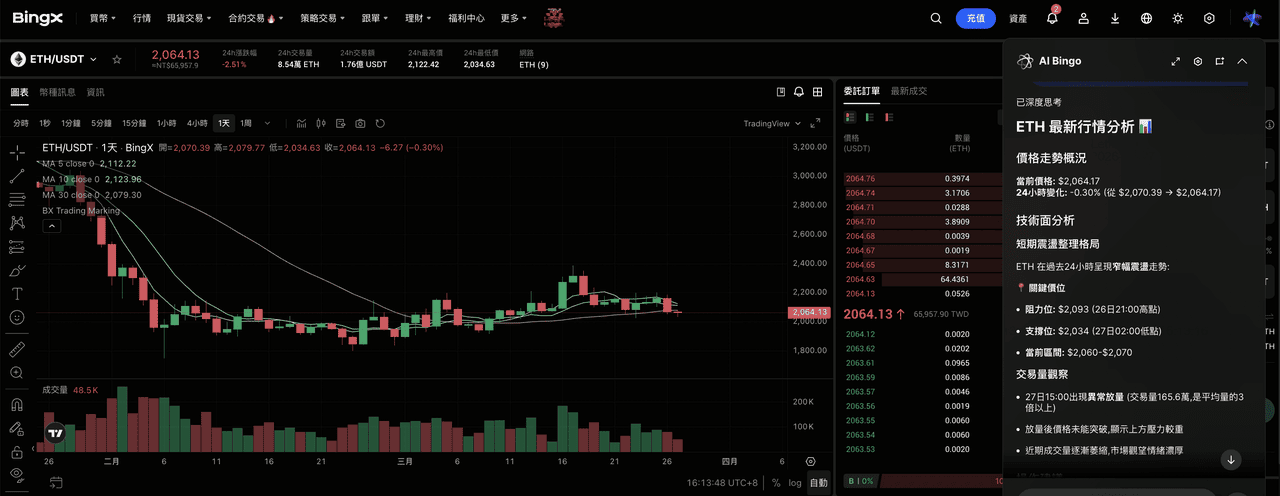
- Register and Complete KYC: Visit BingX official website or download app, complete account registration then upload identity documents for KYC verification, deposits and trading are available after approval.
- Deposit ETH: In "Assets" page click deposit, select ETH, copy BingX's ERC-20 deposit address, transfer ETH from personal wallet or other exchanges. Confirm using ERC-20 network, verify address before transfer.
- Enter Spot Trading Page: After ETH arrives, go to "Spot Trading" page, search and select ETH/USDT trading pair.
- Select Order Type and Sell: Choose "Market Order" (immediate execution) or "Limit Order" (set target price and wait for matching), enter ETH amount to sell. Confirm expected USDT amount and fees before submitting order.
- Confirm USDT Receipt: After order execution, USDT is credited to spot account balance, ETH has been converted to USDT, USD-denominated asset value is now locked.
- Choose Withdrawal Path: Go to "Assets" → "Withdrawal", select subsequent withdrawal method: withdraw USDT via TRC-20 to Taiwan exchanges for TWD conversion, or transfer to Kraken for USD conversion then SWIFT wire to foreign currency accounts.
Ethereum to USD Fee Considerations and Cost Control Key Points
In actual ETH to USD conversion operations, besides choosing low-fee platforms, many details can affect final costs. Here are several key points often overlooked but significantly impacting overall fees:
- Calculate Total Fees Rather Than Just Individual Rates: Trading fees, on-chain withdrawal fees, and fiat withdrawal fees belong to different segments and cannot substitute for each other. When comparing platform fees, all costs throughout the entire process should be included in calculations, rather than relying solely on single fees displayed by exchanges, to accurately assess final received amounts.
- Fixed Fees Have High Proportions for Small Withdrawals: Some withdrawal methods use fixed charges, such as SWIFT wire transfers at approximately $25. When withdrawal amounts are small, fixed fee proportions become significantly high, raising overall costs. If withdrawal needs are not urgent, consider accumulating to larger amounts for single withdrawals, or choose other withdrawal paths with lower fee structures.
- Avoid Ethereum Network Peak Hours for Withdrawals: Ethereum network Gas fees fluctuate with transaction demand, potentially rising to several times normal levels during peak hours. If withdrawal timing is flexible, choose less congested network periods for transfers to reduce on-chain fees and improve overall cost efficiency.
- Beware of Spread Costs Behind "Zero Fees": Some platforms or instant exchange services claim zero fees but may actually charge through widened bid-ask spreads. Even with nominal zero rates, actual trading costs can still reach 1%+. When evaluating, compare both execution prices and market mid-prices, not just surface fee numbers.
- Complete Advanced KYC Early to Unlock Withdrawal Limits: Most exchanges' large withdrawal functions require advanced KYC verification, with review processes typically taking several business days. Users with larger fund transfer needs should complete verification procedures in advance to avoid withdrawal delays or amount restrictions affecting fund arrangements during actual withdrawals.
Conclusion
Actual costs of ETH to USD conversion typically don't come solely from exchange-displayed trading fees, but comprise trading fees, on-chain fees, and withdrawal costs combined. Without comprehensive evaluation of the entire process, discrepancies between final received amounts and expectations can easily occur.
In practical operations, using BingX as the conversion starting point, combined with low-rate spot trading and TRC-20 withdrawal mechanisms, can effectively control front-end costs; subsequently, if targeting TWD deposits, completing withdrawal through Taiwan exchanges typically achieves better balance between fees and operational convenience. If USD direct deposits to foreign currency accounts are needed, withdrawal can be completed through exchanges supporting SWIFT wire transfers, but usage at larger amounts provides better cost efficiency.
Overall, the key to cost reduction lies not in single choices, but in process combinations and execution methods. Through basic strategies like using limit orders, selecting low-fee networks for asset transfers, and completing KYC verification in advance, overall costs can be continuously optimized across different withdrawal scenarios, making every fund conversion more efficient.
Related Reading
- How to Buy Ethereum in Taiwan? 2026 Ethereum Exchange Recommendations and Complete Purchase Process Tutorial
- How to Convert Ethereum to USD? Complete Taiwan ETH to USD Beginner Guide (2026)
- What are Cryptocurrency Trading Fees? What is Spread? Complete Guide to Trading Costs
- Taiwan Exchanges vs. International Exchanges: How to Choose the Right Cryptocurrency Trading Platform for You?
- How to Choose Cryptocurrency Exchanges? 2026 Taiwan Cryptocurrency Exchange Recommendations