Risk-on vs. risk-off is a psychological and mechanical framework that describes how global capital moves based on investor risk tolerance. In a risk-on environment, market participants are optimistic about the global economy, seeking higher returns on risky assets like Bitcoin (BTC), altcoins, and high-growth tech stocks. Conversely, during risk-off periods, uncertainty triggers a flight to quality, where capital flows into defensive safe havens such as Gold (XAU/USD), the US Dollar (DXY), and Treasury bonds.
In the 2026 trading landscape, the wall between cryptocurrency and Traditional Finance (TradFi) has effectively collapsed. Bitcoin and Ethereum now serve as primary barometers for global risk sentiment, often moving in lockstep with the Nasdaq or reacting instantaneously to macroeconomic data like CPI prints and Federal Reserve interest rate decisions.
This guide explains what causes risk-on and risk-off markets, which assets do well in each, how to spot key signals, and how to build a trading strategy for both situations. You’ll also learn how to use BingX as your main trading hub.
What Is Risk-On vs. Risk-Off in Crypto Trading?
To understand risk-on and risk-off trading in crypto, start with investor risk tolerance. This idea explains how people move their money depending on how they see the world economy.
- Risk-On: When investors are confident, they are willing to take more risks. They put money into stocks, crypto, and commodities to try for higher returns. This usually happens when economic data is good, companies are making strong profits, and central banks are supportive.
- Risk-Off: When the economy is uncertain, investors become careful. They leave risky assets and move their money into safer options to protect their wealth. This often happens during political events, rising inflation, or sudden market shocks.
This idea started in traditional finance to explain how big investors move money between different types of assets. Now that Bitcoin is a global asset, these same patterns also apply to crypto markets. Knowing whether the market is risk-on or risk-off is now essential for making smart choices.
Risk-on or Risk-off in 2026 Markets: Crypto Meets TradFi
In the 2026 trading landscape, the wall between Cryptocurrency and Traditional Finance (TradFi) has effectively collapsed. Bitcoin and Ethereum now serve as primary barometers for global risk sentiment, often moving in lockstep with the Nasdaq or reacting instantaneously to macroeconomic data like CPI and Fed interest rate decisions.
To succeed in this time of cross-asset volatility, traders need to look beyond basic chart patterns. BingX offers a single platform for 2026 that lets you quickly switch from bold crypto trades to safer assets like gold and forex. Knowing how these market moods work can mean the difference between making big gains or facing losses when sentiment changes fast.
The Mechanics of Risk Sentiment: Fear vs. Greed
In 2026, market sentiment is clear to see as money moves between different assets. To trade well, you need to spot whether people are chasing risk (greed) or trying to protect their money (fear).
1. Risk-On Environments: When Investors Chase Higher Returns
A risk-on environment signals that growth is likely. It often starts when economic data shows steady expansion, companies report strong earnings, and central banks keep interest rates low or hint at easier policies. When investors feel confident, they are more willing to take risks for higher returns.
What Triggers a Risk-On Environment?
- Strong GDP growth figures signaling economic expansion
- Positive corporate earnings reports from major companies
- Dovish central bank actions like rate cuts or accommodative signals from the Fed
- Low inflation data that reduces fears of tighter monetary policy
- Improving employment data suggesting a healthy labor market
- Geopolitical stability reducing uncertainty in financial markets
How Markets Behave in a Risk-On Environment
During risk-on periods, investors leave low-yield government bonds and put more money into higher-risk, higher-return assets. Prices in crypto and stock markets, such as the Nasdaq, often rise. As confidence grows, market volatility drops and demand for speculative assets increases.
In early 2026, the Federal Reserve signaled a neutral stance even though inflation stayed high. Investors saw this as a sign to buy riskier assets like Solana and AI-tech stocks, which pushed the risk-on market to new highs. Bitcoin went above $85,000 for a short time as big investors returned to crypto.
Top Risk-On Assets to Watch in 2026
The following asset classes benefit most in risk-on environments:
|
Asset Class |
Examples |
Why It Thrives |
|
Cryptocurrencies |
BTC, ETH, SOL, altcoins |
High-beta, high-return speculation |
|
Equities |
Nasdaq, S&P 500, growth stocks |
Economic optimism boosts valuations |
|
Commodities |
Oil, copper, industrial metals |
Signal rising economic demand |
|
High-yield bonds |
Corporate bonds, emerging market debt |
Investors accept more credit risk |
2. Risk-Off Environments: When Capital Seeks Safety
A risk-off sentiment is the red light. It is often triggered by economic uncertainty, geopolitical market stress, or a sudden spike in inflation data. When this happens, market participants stop caring about higher returns and start focusing on reducing risk and preserving capital.
What Triggers a Risk-Off Environment?
- Geopolitical tensions, wars, or attacks on critical infrastructure (e.g., energy supply chains)
- Higher-than-expected inflation data forcing the Fed to maintain or raise rates
- Weak economic data suggesting an economic downturn is approaching
- Corporate earnings misses causing equity market sell-offs
- A sudden credit event or financial contagion, e.g., a major bank failure
- Hawkish central bank signals that reduce liquidity in financial markets
How Markets Behave in a Risk-Off Environment
In risk-off environments, we see a classic flight to quality. Capital exits riskier assets and pours into safe havens that are perceived to protect purchasing power during market stress. Asset prices in equity markets and crypto markets fall, market volatility increases sharply, and increased volatility across all risk assets becomes the prevailing condition.
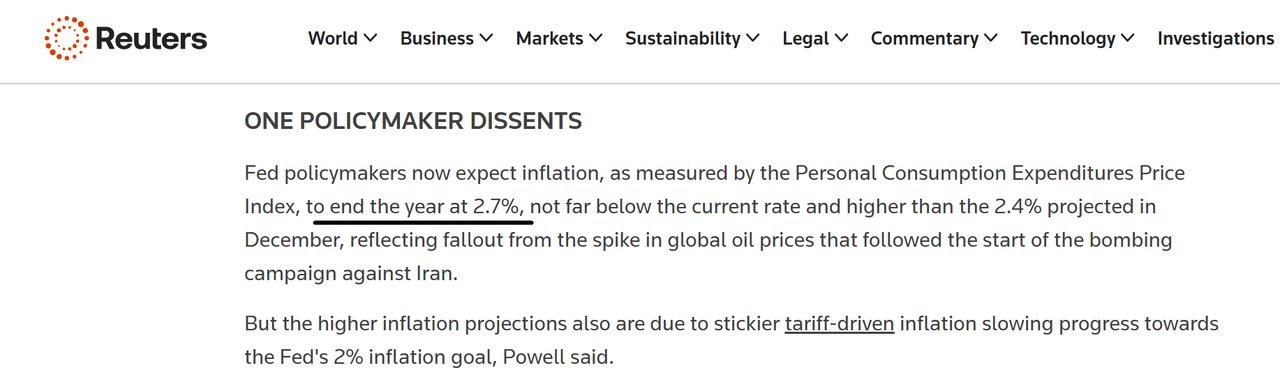
For example, on March 18, 2026, when the FOMC upgraded inflation forecasts to 2.7%, Bitcoin saw a sharp 5% sell off as investors rotated into the US Dollar and Gold.
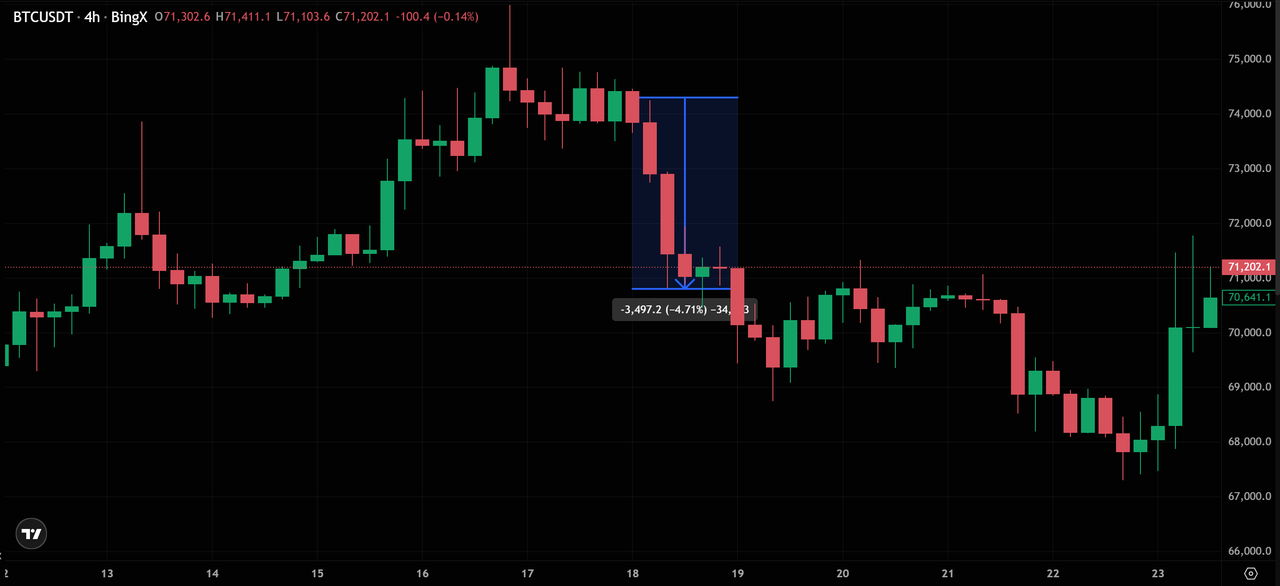
This was a classic risk off period where the Japanese Yen and Swiss Franc also saw increased demand as safer investments.
Top Risk-Off or Safe Haven Assets in 2026
The following assets traditionally absorb capital during risk-off periods:
|
Safe Haven Asset |
Symbol/Instrument |
Why It Attracts Capital |
|
US Dollar |
DXY, USD pairs |
World reserve currency, global liquidity |
|
Gold |
XAU/USD |
Store of value, inflation hedge |
|
Japanese Yen |
JPY |
Low-rate carry trade unwind currency |
|
Swiss Franc |
CHF |
Neutral country, stable economy |
|
US Treasury Bonds |
2Y, 10Y bonds |
Government-backed, low default risk |
What Are the Top Indicators to Identify Risk-On vs. Risk-Off Conditions?
To make informed decisions in any market, you need to read the signals before the crowd acts. In March 2026, the most successful traders are Fed Watchers who track a blend of market-based indicators and macroeconomic data to identify prevailing market conditions before major moves occur.
Market-Based Indicators
- VIX (Volatility Index): Often called the fear gauge, the VIX measures expected market volatility in the S&P 500. A VIX above 25-30 signals elevated fear and risk-off conditions; below 15 suggests complacency and risk-on sentiment.
- Bitcoin Dominance Index: When Bitcoin's share of total crypto market cap rises, it signals risk-off behavior within crypto. Investors are rotating out of altcoins into the perceived relative safety of BTC. When dominance falls, risk appetite increases.
- Crypto Fear & Greed Index: This composite index scores market sentiment from 0 (extreme fear) to 100 (extreme greed). During the March 2026 geopolitical flash event, this index plummeted to 25 ('Fear'), signaling a clear risk-off environment in crypto markets.
- US Dollar Index (DXY): A rising DXY typically signals risk-off conditions. Global investors are fleeing to the dollar. A weakening DXY often coincides with risk-on environments as capital flows into higher-yielding assets.
Macroeconomic Data to Watch
- CPI / Inflation Data: If the US CPI comes in higher than the forecasted level, the market expects fewer interest rate cuts from the Fed. This is a classic risk-off signal that causes asset prices to drop across equity markets and crypto markets alike.
- Federal Reserve Policy Decisions: FOMC meetings, Fed Chair speeches, and dot plot releases are the single most market-moving events. Hawkish signals drive risk-off; dovish signals ignite risk-on environments.
- Employment Data (NFP): Weaker-than-expected payroll data suggests an economic downturn approaching. Paradoxically, bad economic news can become risk-on for Bitcoin if traders expect it will force the Fed to cut rates and inject liquidity.
- GDP Growth Figures: Strong GDP data reinforces risk-on sentiment; contracting or below-forecast GDP raises recession fears and triggers risk-off positioning.
Cross-Asset Signals
Tracking how multiple asset classes move together provides the clearest picture of current market sentiment. During risk-off periods, you will typically see: Gold rising, DXY strengthening, bond yields falling (as prices rise), equity markets declining, and Bitcoin selling off in tandem with the Nasdaq.
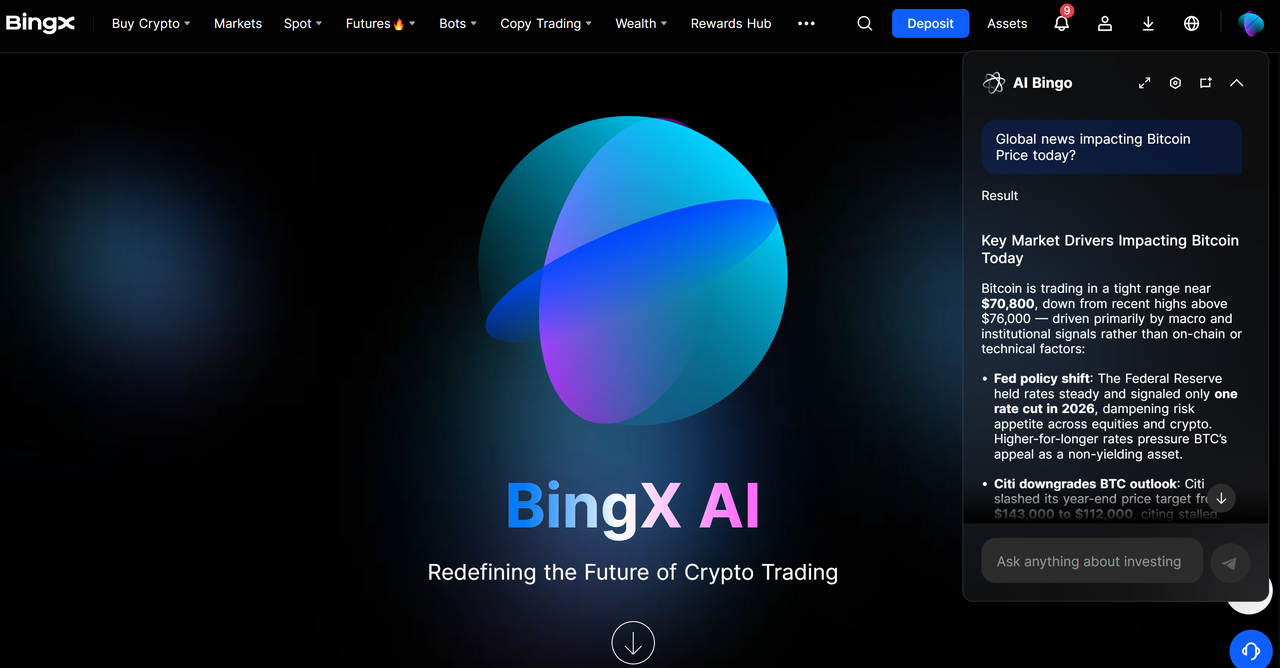
BingX Tool: Instead of manually tracking every report, the BingX AI Macro-Pulse (AI Bingo) analyzes global news, central bank actions, and on-chain flows in real-time, alerting you when prevailing market conditions shift from Greed to Fear.
Cryptocurrency’s Role in Market Sentiment: Is Bitcoin Still a Risk Asset in 2026?
By 2026, Bitcoin has taken on a dual role in finance. It still acts as a higher-risk asset when markets are optimistic, often beating stocks and other risk assets. But during certain market stresses, it starts to behave more like Gold.
When making trading decisions, it’s still important to keep an eye on the stock market. If the S&P 500 drops sharply, many investors sell their crypto to cover losses, which makes prices more volatile. But if people lose confidence because of currency devaluation or failed monetary policy, not just general fear, Bitcoin often breaks away from other assets and acts as a safe haven.
Bitcoin vs. Altcoins: Different Risk Profiles Within Crypto
Not all crypto assets respond equally to risk sentiment shifts. Understanding the internal hierarchy is critical for managing risk within your crypto portfolio:
- Bitcoin (BTC): The relative safe haven within crypto. During risk-off periods, capital rotates from altcoins into BTC before leaving crypto entirely. Bitcoin Dominance rising is an early warning sign of deteriorating risk appetite.
- Ethereum (ETH) and large-cap altcoins: Higher beta than Bitcoin. They amplify risk-on gains but also suffer deeper drawdowns during risk-off conditions.
- Small-cap and meme coins: The highest-risk assets within crypto. These are the first to sell off when risk sentiment shifts and the last to recover. They thrive only in deep risk-on environments.
- Stablecoins (USDT, USDC): Crypto's built-in risk-off instrument. Rotating into stablecoins is the crypto equivalent of moving into Treasury bonds. It preserves capital while keeping you in the ecosystem.
The March 2026 Geopolitical Flash: A Case Study on Market Sentiment
During mid-to-late March 2026, a convergence of geopolitical tensions in the Middle East and a hawkish Federal Reserve stance triggered a classic flight to quality. This event perfectly illustrated how crypto behaves during genuine risk-off periods.
- The Catalyst: Reports of attacks on energy infrastructure caused oil prices to surge, immediately raising inflation fears and leading investors to expect the Fed to hold rates higher for longer.
- The Reaction: Market participants responded by selling higher-risk assets like Bitcoin and the Nasdaq, rotating into the US Dollar and Gold.
- The Liquidity Crunch: The market saw over $500 million in long liquidations in a single session. Bitcoin dipped below $70,000, proving that during periods of increased volatility, crypto often loses its Digital Gold status and behaves like a speculative risk asset.
- The BingX Edge: Traders who recognized the risk-off shift early used BingX to pivot into safe havens. While the Crypto Fear & Greed Index plummeted to 25, proactive traders hedged with Japanese Yen and Gold positions, preserving capital while others faced liquidations.
Top Risk-On vs. Risk-Off Trading Strategies for Crypto Traders
Knowing the market regime matters only if you turn that knowledge into a real trading plan. In a risk-on market, focus on higher-return assets. In a risk-off market, focus on protecting your capital and lowering risk. Top traders adjust their strategies to fit current market conditions instead of sticking to just one approach.
1. Trading in a Risk-On Environment
When economic data looks good, central banks are supportive, and market sentiment is strong, it’s usually best to take on more risk:
- Buy BTC, ETH, and high-beta altcoins. These assets often give the best returns when the market is risk-on. Look for breakouts above important technical levels as more big investors enter the market.
- Rotate from stablecoins into risk assets: If you’ve been holding USDT or USDC to play it safe, a risk-on market is a good time to put that money back into active trades.
- Use leverage cautiously: BingX Perpetual Futures let you increase your exposure in risk-on times, but it’s important to manage your position sizes. Remember, leverage can increase losses just as fast as gains.
- Trend-following momentum strategies: In a clear risk-on market, prices often keep moving in one direction. Using momentum and trailing stop strategies can help you catch these longer trends.
2. Trading in a Risk-Off Environment
When economic data turns negative and the market becomes risk-off, your main goal should be to protect your capital instead of chasing big returns. Here’s how the 'Flight to Quality' strategy works on BingX:
- Rotate into stablecoins: Moving into USDT or tokenized government bonds allows you to wait out increased volatility while remaining positioned to re-enter risk assets when conditions improve.
- The Gold Hedge: Many investors buy Gold (XAU/USD) on BingX because it historically thrives in risk-off environments when traditional assets like stocks are falling. Gold tends to benefit from both geopolitical uncertainty and fiat currency devaluation fears.
- Short high-beta assets via BingX Perpetual Futures: Altcoins typically drop faster than Bitcoin during a sell-off, making them candidates for short positions when risk-off sentiment is confirmed.
- Long safe haven Forex pairs: Simultaneously opening Long positions on the US Dollar (DXY) or the Japanese Yen on BingX allows traders to balance crypto exposure with traditional safe haven positions on a single platform.
BingX Feature: Use BingX AI Protector, it monitors your leverage and liquidation levels 24/7, providing real-time alerts if market volatility threatens your investment decisions during sudden risk-off shifts.
3. Trading the Transition: Identifying Sentiment Shifts Early
The most profitable and most dangerous moments in any market cycle are the transitions between risk-on and risk-off environments. Identifying these shifts before the majority of market participants react is where asymmetric opportunities exist.
- Watch DXY and Gold simultaneously: When both the US Dollar and Gold begin rising together, it is a powerful confirmation of a risk-off shift, as capital is flooding into the two most prominent safe havens simultaneously.
- Monitor Bitcoin Dominance for early crypto signals: A sudden spike in BTC Dominance, even before crypto prices broadly fall, indicates professional traders are rotating out of altcoins into BTC, an early risk-off warning.
- Track the VIX for equity market stress: A VIX spike above 25 in equity markets almost always precedes a sell-off in crypto due to cross-asset correlation. Professional crypto traders treat the VIX as a leading indicator.
- Reduce position sizes before major macro events: FOMC meetings, CPI releases, and NFP data can instantly shift market sentiment in either direction. Reducing exposure ahead of these events is sound risk management practice.
Top 5 Risk Management Tips for Both Risk-on and Risk-off Environments
Whether conditions are risk-on or risk-off, disciplined risk management is what separates professional traders from reactive gamblers. The framework below applies across market conditions.
- Set stop-losses aligned with prevailing conditions: In risk-on environments, stops can be wider to accommodate normal volatility; in risk-off conditions, tighter stops protect against gap-down moves and liquidation cascades.
- Diversify across asset classes: Holding a mix of BTC, stablecoins, and Gold or Forex positions via BingX TradFi instruments, reduces your single-asset exposure during sudden sentiment shifts.
- Size positions based on your risk tolerance: Never risk more than 1-2% of total capital per trade in volatile conditions. This ensures that a bad sequence of trades does not result in catastrophic portfolio damage.
- Maintain a macro calendar: Track key economic data releases like FOMC, CPI, NFP, etc., so you are never caught off guard by a sudden sentiment shift. Reducing position size before major macro events is a professional standard.
- Avoid emotional investment decisions: Risk-off periods create panic; risk-on periods create greed. Having a predefined trading strategy with clear entry and exit criteria removes emotion from your decision-making process.
Conclusion: Trade 2026 Risk-on and Risk-off Markets on BingX
Today, you can’t trade cryptocurrency without considering the bigger financial picture. Changes in central bank policy, energy prices, or global events all affect your results. By learning risk-on and risk-off strategies, you move from reacting to price changes to planning ahead like a professional.
The transition between risk-on and risk-off regimes is where the largest opportunities and the largest risks exist in crypto markets. The traders who consistently outperform are not those who predict every move, but those who position themselves correctly when the macro environment shifts.
BingX gives you a single platform for 2026 to handle both risk-on and risk-off markets. Whether you are protecting your money in Gold during a downturn, hedging with US Dollar positions while holding Bitcoin, or using leverage on altcoins in a strong risk-on market, BingX helps you manage risk and find opportunities in any condition.
Related Articles
- How to Manage Risks in Copy Trading on BingX: Key Features You Should Know
- How to Trade Gold and Silver-Backed Crypto on BingX in 2026
- What Is Crypto Fear and Greed Index and How to Use It in Crypto Trading?
- 10 Key Indicators to Signal a Crypto Bull Run
- Top 10 On-Chain Analysis Tools for Crypto Traders: Free List for 2026
FAQs on Risk-on or Risk-off Market Sentiment
1. What is the difference between a risk-on and risk-off market?
A risk-on market occurs when investors are optimistic about the global economy and seek higher returns on risky assets like Bitcoin and tech stocks. A risk-off market occurs during economic uncertainty, causing a 'flight to quality' where capital flows into safer investments like Gold, the US Dollar, and Treasury bonds to preserve capital.
2. Is Bitcoin considered a risk-on or risk-off asset in 2026?
In 2026, Bitcoin primarily behaves as a high-beta risk-on asset, moving in correlation with the Nasdaq. However, it is increasingly viewed as a neutral safe haven during specific fiat currency crises or banking failures, often decoupling from equity markets to act as Digital Gold.
3. Which technical indicators signal a shift to a risk-off environment?
Key signals for a risk-off sentiment include a spike in the VIX (Volatility Index), a strengthening US Dollar Index (DXY), rising Gold prices, and higher-than-expected CPI inflation data. On BingX, a sudden rise in Bitcoin Dominance is often an early warning that traders are fleeing volatile altcoins.
4. How can I protect my crypto portfolio during a risk-off period?
To reduce risk during a sell-off, traders use BingX to rotate into stablecoins (USDT) or hedge their positions by opening Long trades on Gold (XAU/USD). You can also use Perpetual Futures to short high-beta risk assets while maintaining your long-term Bitcoin holdings.
5. What macro events trigger risk-on markets?
Risk-on environments are typically ignited by dovish central bank actions (interest rate cuts), strong corporate earnings, and positive GDP growth figures. These factors increase investor risk tolerance and attract capital into the financial world's more speculative investment vehicles.